Top Signs You Need Gate Repair Service — Don’t Ignore These
A gate that hesitates a half-second longer than it used to is already failing — that pause means the motor is working 40% harder than it should, burning itself out while you wait for a “real” problem. Most gate failures don’t announce themselves with a bang. They whisper for weeks through sounds, speeds, and small behaviors that owners dismiss as “just how this old gate is.” Learning to read those signals early can save you from a $1,200+ motor replacement or a gate stuck open at midnight. If you’d rather not diagnose it yourself, call Ironwood Gate Repair Los Angeles at (833) 805-4890 — estimates are free.
That Slight Hesitation Is Your First Warning
The most overlooked sign is also the earliest: a change in timing. Your gate used to open in four seconds. Now it takes six. Or it pauses at the same spot every morning, then continues like nothing happened.
That pause isn’t random. In our 14 years working gates across Los Angeles, from the hills of Silver Lake to the flat lots of the San Fernando Valley, we’ve traced that exact symptom to three root causes — and only one is benign:
- Failing capacitors in the motor housing — common in LiftMaster and Mighty Mule operators after 5–7 years of summer heat cycles
- Dry, binding hinges or track misalignment — the motor compensates until it can’t
- Low voltage from a degrading transformer — intermittent, invisible, and a fire risk if ignored
The motor doesn’t have a “struggle” indicator light. It just works harder, runs hotter, and dies younger. We’ve replaced operators in Hancock Park that could have lasted another five years if the homeowner had called us when they first noticed the hesitation.
Here’s the 60-second test anyone can do: pull the manual release handle (usually a red cord or lever) and move the gate by hand. It should glide with light, even pressure. If you hit a sticky spot, hear grinding, or need real force to get it started, the problem is mechanical — and the motor is fighting that resistance every single cycle.
Intermittent Failures Are More Dangerous Than Consistent Ones
A gate that never works is annoying. A gate that works “most of the time” is dangerous because it trains you to ignore the problem.
Intermittent issues point to electrical gremlins — loose terminals, moisture in low-voltage connections, or failing safety sensors sending mixed signals. These escalate fast. We’ve responded to emergency calls in Culver City where a gate that “just needed a nudge” last week was now fully dead, trapping a contractor’s truck inside at 6 a.m.
The pattern matters. Track it:
- Morning only? Dew or temperature-related connection expansion
- Hot afternoons? Thermal overload in the control board, common with older DoorKing and Elite systems
- After rain? Water intrusion in conduit or photocell housings
- Random, no pattern? Failing transformer or intermittent short — the worst kind, because it’s hardest to reproduce
When we diagnose these in Los Angeles, we don’t guess. We bring load testers, multimeters, and replacement control boards for the nine brands we support — LiftMaster, FAAC, BFT, Linear, Viking, Ghost Controls, DoorKing, Elite, and Mighty Mule — so we can isolate the fault on-site, not order parts and hope.
Sacramento’s Dry Heat Leaves Specific Signatures
Los Angeles gates face their own climate stress, but we’ve expanded into Gate Repair in Sacramento and see distinct patterns there worth mentioning — because the same physics apply in hotter Valley conditions.
UV-cracked wiring insulation is epidemic in Sacramento’s 100°+ summers. The outer jacket looks fine, but flex it and it crumbles, exposing copper to moisture and rodents. Dry heat also warps aluminum gate frames, binding hinges that were properly aligned in March. We’ve cut open conduits in Natomas where the wire inside was green with corrosion from condensation — the crack was invisible until the short appeared.
In Los Angeles, coastal moisture does the opposite damage: corrosion at terminal blocks, swollen wooden gate panels that drag on the track, and salt air eating steel hardware in beach-adjacent properties from Venice to San Pedro.
The point: your climate writes its own failure signature on your gate. A specialist recognizes which signature they’re reading.
Know the Difference: Operator Problems vs. Structural Problems
Homeowners — and too many generalist repairmen — conflate these. They treat every gate issue as “the motor,” swap in a new operator, and wonder why the same symptom returns in a month.
Operator warning signs:
- Clicking or humming from the motor housing with no movement
- Remote works inconsistently but the wall button works fine
- Gate reverses immediately after starting, or stops mid-travel for no visible reason
- LED diagnostic flashes on the control board (each brand uses its own code — we carry the reference sheets for all nine)
Structural warning signs:
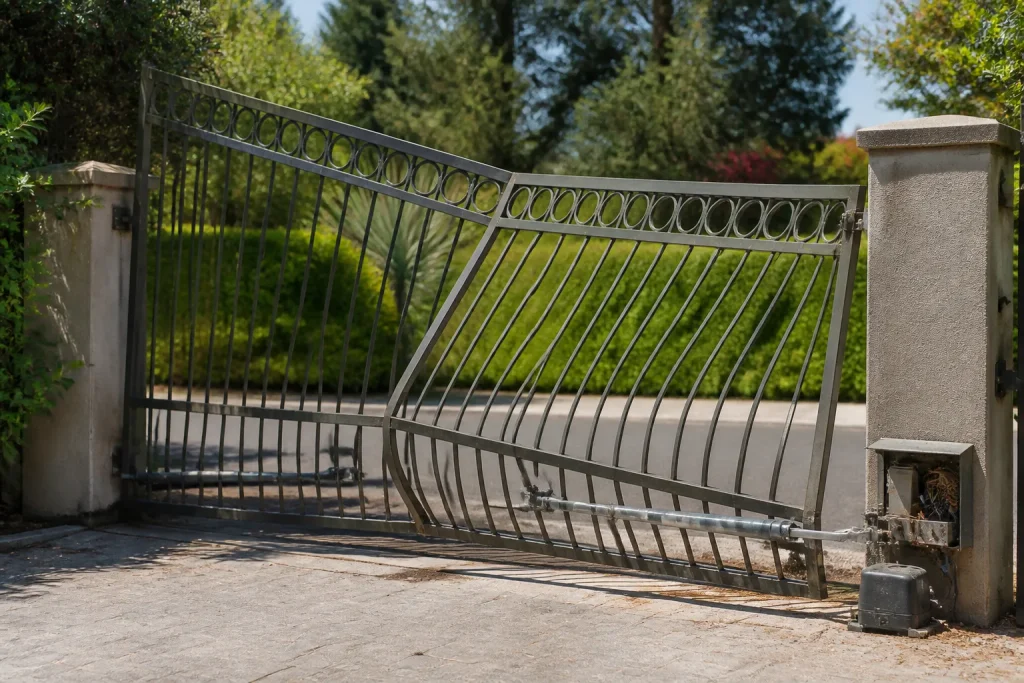
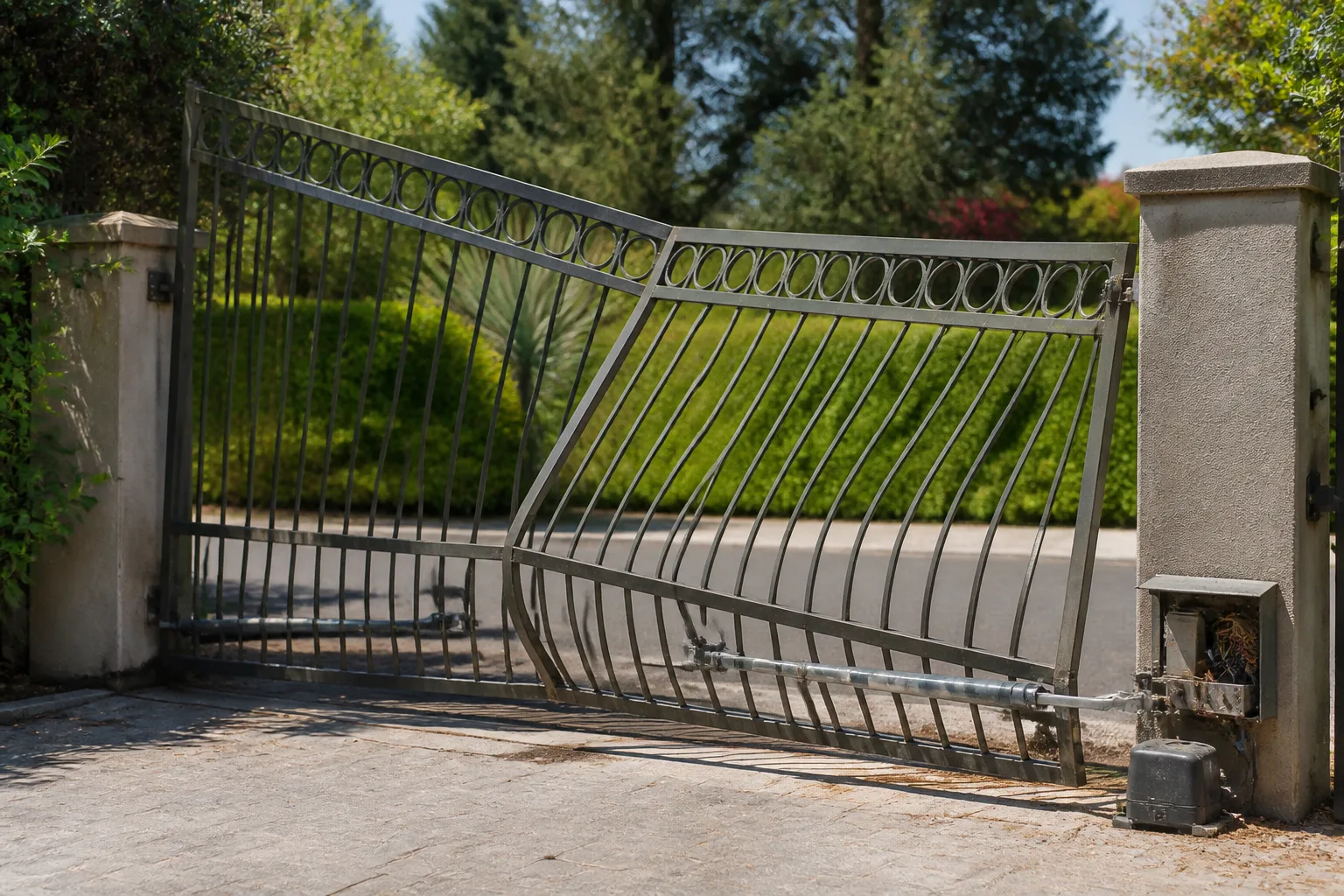
- Visible sag in a swing gate, or rollers jumping the track on a slide gate
- Scraping sound that changes with temperature (metal expanding and contracting)
- Gate physically stuck in one position, motor straining audibly
- Welds cracking at hinge points or picket-to-frame joints
Here’s where our Gate Installation in Sacramento background matters: we’ve hung enough gates to know when the original install is the real culprit. A post set in shallow concrete, a slide gate with inadequate fall for drainage, or a cantilever system missing its counterbalance — these aren’t operator problems, and no motor swap fixes them. David and his team carry welding gear and structural hardware on every truck so we can address both categories in one visit, not subcontract the hard part and leave you scheduling round two.
The “It Still Works” Tax: What Deferred Repair Actually Costs
We hear this weekly. “It still works, mostly. I’ll call when it actually breaks.” Fair enough — except gates don’t break cleanly. They fail incrementally, and each increment damages something else.
A binding hinge doesn’t just make the motor work harder. It sends vibration through the operator’s gear assembly, accelerating wear on nylon gears that cost $40 to replace early or $400 when they’ve chewed up the housing. A misaligned safety sensor doesn’t just cause nuisance reversals. It forces the control board to cycle power repeatedly, cooking capacitors that were already marginal from age.
Real numbers from our Los Angeles jobs last year: a hinge adjustment and lubrication runs $120–$180. Replacing the same hinge after it’s seized and cracked the mounting weld: $340–$520, plus the gate may be out of service while we fabricate a repair bracket. Catching a failing LiftMaster gear assembly at first noise: $220 parts and labor. Waiting until the motor stalls completely: $890–$1,400 for full operator replacement.
The math isn’t complicated. The hard part is overcoming the human tendency to accommodate a slowly worsening problem.
When to Call a Pro
If you’ve done the manual-release test and found resistance, if your gate has any intermittent behavior, or if you’ve noticed a timing change in the last month — that’s the window. Not next quarter, not after the holidays. Gates don’t heal themselves, and Los Angeles traffic doesn’t get more forgiving when you’re stuck waiting for a repair truck.
David Kaplan serves as both owner and Field Supervisor at Ironwood Gate Repair Los Angeles. That means the person with final accountability shows up on your job, not a rotating crew of technicians you’ve never met. In 14 years of gate-only work, we’ve accumulated 233 verified reviews at a 4.7 rating — not because every gate is an easy fix, but because we diagnose the real problem and finish it.
Related services in Los Angeles: Gate Motor & Opener in Sacramento covers automation upgrades and brand-specific troubleshooting, while our welding and parts fabrication capability means broken hardware is repaired on-site, not ordered and hoped-for.
Key Takeaways
- A hesitation of even one second signals motor overwork — test with the manual release
- Intermittent failures are electrical and escalate faster than consistent mechanical problems
- Los Angeles coastal moisture and inland heat each create distinct, recognizable damage patterns
- Operator symptoms and structural symptoms require completely different fixes — misdiagnosis wastes money
- Deferred repair multiplies costs: a $120 hinge adjustment becomes a $500+ welding and motor repair
The Bottom Line
Gates talk before they fail. The hesitation, the new sound, the morning-only glitch — these aren’t quirks. They’re diagnostic data, and they’re free to collect if you’re paying attention. Ignore them, and the same gate that whispered will eventually strand you, damage your vehicle, or fail open when you need security most.
If you’re in Los Angeles and your gate is showing any of these signs, Ironwood Gate Repair Los Angeles offers free estimates with no pressure to book. Call (833) 805-4890. David or a member of his team will diagnose it properly, fix it completely, and leave you with a gate that moves like it’s supposed to.
Frequently Asked Questions
Most residential gate repairs in Los Angeles range from $150 for minor hinge or sensor adjustments to $650 for motor component replacement. Full operator replacement on a standard single-family swing gate typically runs $890–$1,400 including labor and programming. We provide exact quotes after diagnosis — estimates are free, and we don’t start work until you approve the price. Call (833) 805-4890 to schedule.
You can safely perform basic observation — the manual-release resistance test, checking for visible obstructions, and verifying remote batteries. For anything involving the motor housing, control board, or high-tension spring-assisted hinges, call a professional. These components store significant energy and can cause serious injury without proper tools and training. We’ve seen DIY attempts in Los Angeles that turned $200 adjustments into $1,000+ damage. If you’re unsure, we’re happy to talk through what you’re seeing on the phone.
Intermittent operation almost always indicates an electrical fault — loose connections, moisture intrusion, or a component approaching thermal failure. These conditions change with temperature, humidity, and vibration, which is why the problem seems random. The critical point: intermittent electrical faults escalate to complete failure without warning, and they can damage other components each time they occur. We recommend scheduling diagnosis within a week of first noticing the pattern.
A quality residential gate operator in Los Angeles should last 10–15 years with proper maintenance, though coastal salt air and intense inland heat can shorten that by 20–30%. The most common premature failure we see isn’t from the motor itself — it’s from neglected hinges and tracks forcing the operator to overwork. Annual lubrication and alignment checks, which we perform during service calls, typically extend motor life by 3–5 years.
Written by David Kaplan, Owner / Field Supervisor at Ironwood Gate Repair Los Angeles, serving Los Angeles since 2012.
Need Gate Repair Help?
Call Ironwood Gate Repair Los Angeles — licensed & insured, here with fast after-hours help in Los Angeles.
(833) 805-4890